New Delhi, January 5–6, 2026
The Twenty-Second Annual IFIP WG 11.9 International Conference on Digital Forensics, organized with the support of the International Federation for Information Processing (IFIP), was successfully held on January 5 and 6, 2026, at Eros Hotel, Nehru Place, New Delhi. The conference served as a global platform for researchers, policymakers, law-enforcement professionals, and technology innovators to exchange knowledge on advances in digital forensics, cybersecurity, and trust systems.
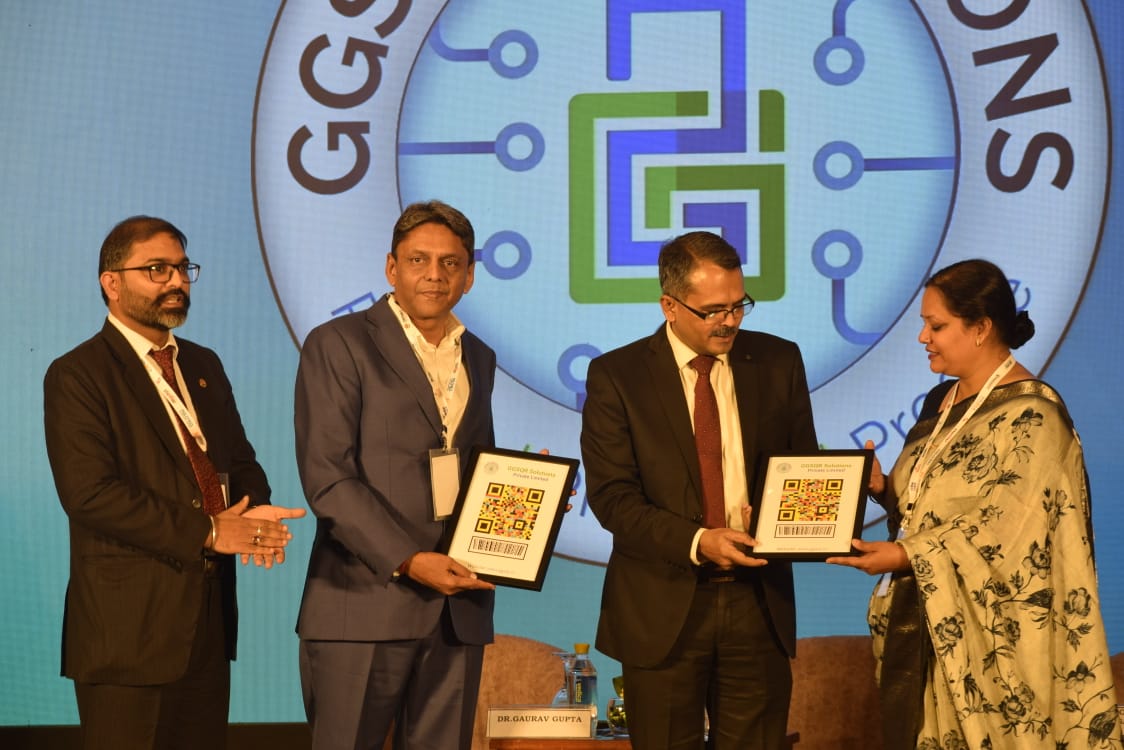
A key highlight of the conference was the official launch of NBR (Non-Reproducible Barcodes), a secure authentication technology developed by GGSQR Solutions Private Limited. The launch took place during the conference program, reflecting IFIP WG 11.9’s continued focus on practical, deployable technologies that address real-world challenges in authentication, counterfeiting prevention, and digital evidence integrity.
The inaugural session was addressed by Navin Kumar Singh, IPS, National Cyber Security Coordinator, Government of India, who spoke on the evolving cyber threat landscape and the importance of resilient and trustworthy digital systems. He said, “Technologies such as Non-Reproducible Barcodes (NBR) by GGSQR Solutions address a critical gap in digital and physical authentication. Solutions that make replication technically infeasible are essential for strengthening trust, traceability, and cyber resilience in today’s interconnected ecosystem.” Referring to innovations presented at the conference, he emphasized that emerging security technologies must be both scalable and verifiable to meet national and global requirements.
The conference program included keynote addresses and technical sessions by distinguished speakers, including Gaurav Gupta, Scientist ‘F’ and Director, Ministry of Electronics and Information Technology (MeitY), who said, “The launch of NBR by GGSQR Solutions reflects the kind of indigenous innovation India needs: solutions that are secure by design, scalable in deployment, and practical for real-world implementation across governance and industry use cases.” He also highlighted policy and technological perspectives on secure digital infrastructure.
Prof. Manindra Agrawal, Director, IIT Kanpur, said, “From an academic and systems perspective, NBR technology developed by GGSQR represents a meaningful advancement in applied security. Embedding non-reproducibility directly into codes is a strong example of research translating into deployable trust infrastructure.” He also underlined the role of academic-industry collaboration in advancing digital forensics research.
In addition to the NBR launch, the conference acknowledged recent developments in secure authentication technologies in India, including the launch of Secure QR (SQR) codes developed by GGSQR Solutions Private Limited, which were inaugurated by the Hon’ble Chief Minister of Gujarat, Shri Bhupendrabhai Patel, on 25 December 2025, reflecting growing governmental adoption of advanced verification and anti-tampering mechanisms.
Lt Col Santosh Khadsare, cyber forensics expert said “Secure and verifiable authentication technologies are no longer optional—they are foundational to India’s digital trust architecture and national security. By embracing innovations like advanced secure codes and non-reproducible barcodes, we can significantly strengthen the integrity of our digital services and protect citizens from evolving cyber threats.”
The IFIP WG 11.9 2026 conference reaffirmed its role as a leading international forum for showcasing cutting-edge research and technologies that contribute to secure, transparent, and trustworthy digital ecosystems.