
The last decade has witnessed an unprecedented digital revolution. From smartphones and cloud computing to artificial intelligence and cryptocurrency, technology has transformed the way society functions. However, this digital transformation has also introduced new forms of crime, making digital evidence an indispensable component of modern investigations. Amid this evolving landscape, Digital Forensics (4N6) has emerged as a pioneering publication, completing ten years of dedicated service to India’s growing digital forensics community.
Since the release of its inaugural issue in August 2016, Digital Forensics (4N6) has remained committed to one mission—to promote awareness, education, and collaboration in the field of digital forensics. At a time when specialized resources on cyber investigations and digital evidence were scarce in India, the magazine created a platform where professionals from law enforcement, cybersecurity, academia, and the private sector could come together to exchange ideas and share expertise.
The vision behind this initiative belongs to Lt. Col. (Dr.) Santosh Khadsare (Retd.), Founder and Editor-in-Chief of the publication. Recognizing the increasing importance of digital evidence in criminal investigations, he understood that building technical capacity required more than training programs; it demanded a continuous flow of knowledge and discussion. Under his leadership, Digital Forensics (4N6) evolved into much more than a magazine—it became a knowledge hub connecting experts, investigators, researchers, and students across the country.
Throughout its ten-year journey, the publication has consistently highlighted emerging technologies, investigative methodologies, cyber laws, and digital forensic innovations. As cyber threats became more sophisticated, the magazine expanded its coverage to include cloud forensics, ransomware investigations, mobile forensics, incident response, blockchain analysis, artificial intelligence, and deepfake detection. By publishing expert opinions, research-based articles, and real-world case studies, it has helped readers stay informed in a field where technology changes almost every day.
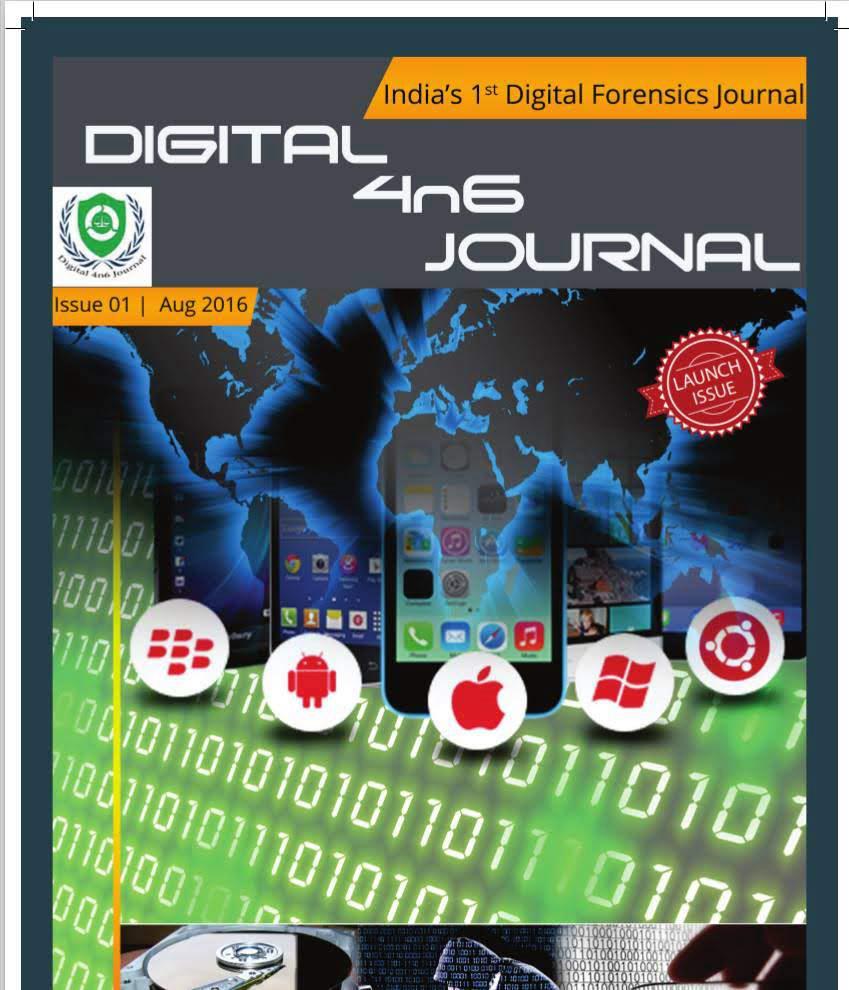
One of the defining strengths of Digital Forensics (4N6) has been its ability to bridge the gap between theory and practice. Its contributors include forensic experts, senior police officers, cybersecurity professionals, legal practitioners, and academic researchers, ensuring that every edition offers practical insights alongside technical depth. This collaborative approach has strengthened the digital forensics ecosystem by encouraging interdisciplinary learning and professional networking.
As Digital Forensics (4N6) celebrates its tenth anniversary, it stands as a testament to the growing importance of digital evidence in today’s justice system. The publication has not only documented the evolution of digital investigations but has actively contributed to shaping the community that drives them. Looking ahead, with challenges such as AI-generated content, encrypted communications, and cross-border cybercrime becoming increasingly complex, the need for reliable knowledge-sharing platforms has never been greater.
A decade after its launch, Digital Forensics (4N6) continues to inspire, educate, and connect professionals across India’s cyber ecosystem. Its journey reflects the remarkable progress of digital forensics itself—and its next chapter promises to be even more impactful as technology and justice continue to evolve together.